Choosing an electric propulsion system for an autonomous aircraft often begins with a familiar question: Can we use an existing motor, or does this platform require something custom?
The answer has implications far beyond motor performance. Propulsion decisions can affect development schedules, aircraft packaging, integration effort, testing requirements, engineering resources, and ultimately how efficiently a platform can transition from prototype to production.
For some aircraft, a production-ready propulsion system provides exactly what is needed. For others, an existing design may provide the right foundation but require modifications. And when the aircraft introduces unique performance or integration requirements, a fully custom propulsion system may be the better approach.
Understanding where a program falls on that spectrum can help aircraft developers avoid both unnecessary engineering and compromises that create problems later in development.
The first step is not deciding whether to go custom. It is defining what the propulsion system actually needs to accomplish.
At a minimum, aircraft developers should understand requirements such as:
These requirements provide the baseline for evaluating available propulsion options. If an existing system meets them without forcing significant changes elsewhere in the aircraft, there may be little reason to engineer something new.
That system-level perspective is becoming increasingly important across electric aviation. In a 2026 Aerospace America discussion of electric propulsion development, industry experts emphasized that the challenge is not simply developing better motors or batteries. Integrating propulsion, energy storage, thermal management, safety, and the aircraft itself is central to moving electric aircraft from development into operational use.
When aircraft requirements align with an existing propulsion system, a production-ready solution can offer significant advantages.
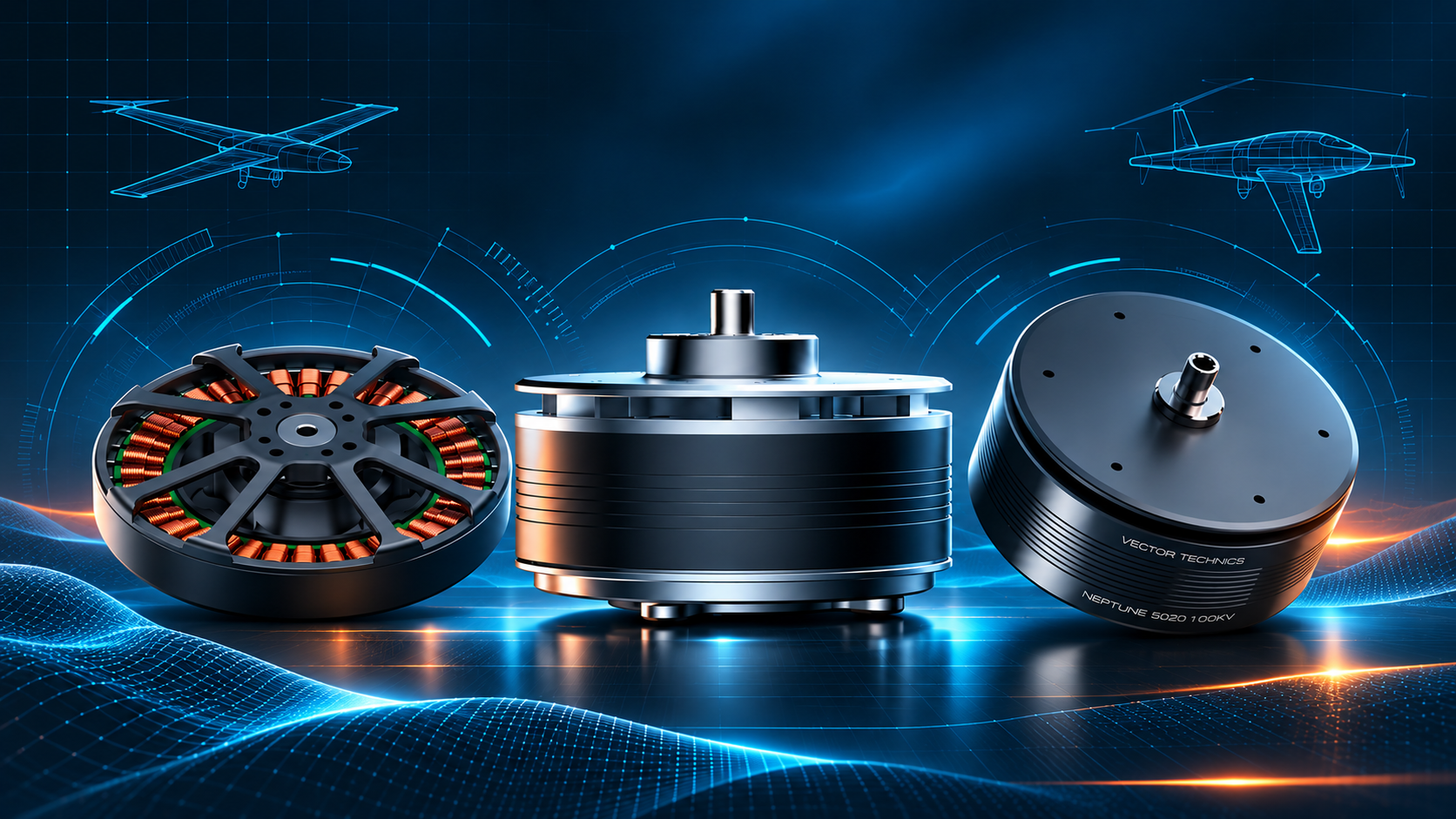
CR Systems offers more than 100 production-ready motor configurations covering applications from Group 1 and FPV aircraft to heavy-lift UAS. Starting with an existing design can reduce engineering time, simplify sourcing, and allow aircraft teams to begin integration and testing sooner.
This approach is often a strong fit when:
Using an existing motor does not eliminate the need for system-level engineering. The motor still has to be properly matched with the propeller, ESC, battery, airframe, and mission profile. But beginning with an established design can remove a substantial amount of propulsion development from the critical path.
The choice is not always between completely off-the-shelf and completely custom.
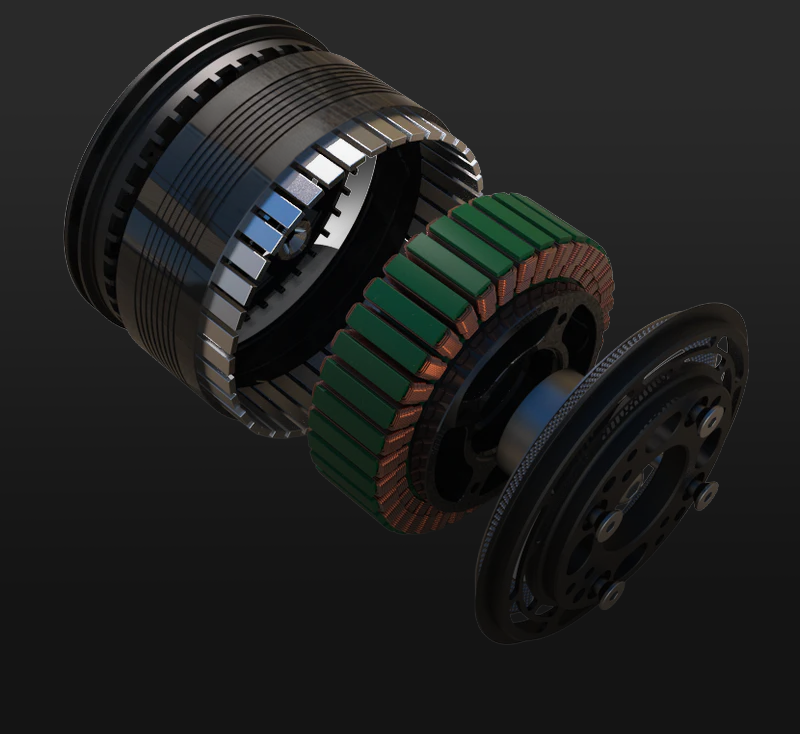
An existing propulsion system may satisfy most of the aircraft's requirements while one or two characteristics create an integration challenge. Perhaps the motor needs a different winding to match the platform's voltage and speed requirements. The mechanical interface may need to change. Packaging constraints may require modifications to the housing, shaft, mounting configuration, or another component.
In these cases, adapting an existing design can provide a practical middle ground. The aircraft developer gains the benefit of a proven propulsion foundation without having to design an entirely new system.
This path can be particularly valuable when a platform is operating under an aggressive development schedule but still has requirements that cannot be satisfied by a standard configuration.
Some aircraft simply cannot be optimized around an existing motor.
A fully custom approach becomes more appropriate when the propulsion requirements are tightly connected to the aircraft's architecture or mission. That might include unusual dimensional constraints, demanding thrust-to-weight requirements, specialized thermal conditions, unique electrical characteristics, high continuous-duty requirements, or a novel propulsion configuration.
Custom engineering can also make sense when the propulsion system itself contributes to the aircraft's competitive or mission advantage.
The tradeoff is additional development effort. A new propulsion system requires engineering, modeling, prototyping, testing, refinement, and validation before transitioning into production. Those steps must be considered early in the aircraft development schedule.
The benefit is that the aircraft does not have to be designed around the limitations of an existing motor. Instead, the propulsion system can be engineered around the aircraft.
Performance specifications are only one part of propulsion selection. A motor that produces the required power and thrust may still be wrong for the aircraft if it does not physically integrate with the platform.
Diameter, length, mounting points, propeller clearance, center of gravity, wiring, ESC placement, cooling, and access for maintenance can all influence whether a propulsion system is viable.
This is why aircraft and propulsion engineering increasingly need to happen together. AIAA's 2026 Electric Propulsion and Advanced Technologies Symposium highlighted aircraft integration, thermal management, electric machines, power electronics, testing, and flightworthiness as interconnected areas of electric propulsion development. (AIAA)
Discovering a packaging conflict late in development can force changes to the propulsion system, airframe, or both. Evaluating those constraints earlier gives engineering teams more flexibility to determine whether an existing, modified, or custom design makes the most sense.
A propulsion system that works for a prototype still has to be manufacturable at the quantities the program eventually requires.
As a platform moves toward production, considerations such as component availability, repeatability, quality control, testing, lead times, and supply-chain stability become increasingly important. A custom propulsion system should therefore be designed not only around performance requirements, but around how it will ultimately be manufactured and validated.
This challenge is not unique to propulsion. As a 2026 Aerospace America report on electric aviation noted, the industry's focus is increasingly shifting from proving that electric aircraft technologies work to determining how those technologies can scale into viable operational systems.
For aircraft developers, that makes production planning part of the propulsion decision from the beginning, not something to address after a successful prototype.
There is no universal advantage to choosing custom propulsion over a production-ready system. The goal is to use the level of engineering the aircraft actually requires.
Choose a production-ready system when an existing motor meets the aircraft's performance, packaging, thermal, and integration requirements and speed to deployment is a priority.
Modify an existing design when the fundamental propulsion architecture works, but targeted changes could create a better fit for the aircraft without requiring a clean-sheet development program.
Consider fully custom engineering when the aircraft's performance, packaging, mission, or environmental requirements cannot be adequately addressed by an existing platform, or when propulsion is integral to achieving a differentiated capability.
The earlier that decision is made, the easier it becomes to align propulsion development with airframe design, testing, qualification, and production schedules.
The best propulsion system is not necessarily the most customized one. It is the solution that meets the aircraft's requirements with the right balance of performance, development time, engineering effort, risk, and production readiness.
CR Systems supports that full spectrum. With more than 100 production-ready motor configurations, the ability to modify existing designs, and in-house engineering for fully custom propulsion development, aircraft manufacturers can begin with the solution that makes the most sense for their platform rather than forcing the platform into a predetermined approach.
That flexibility is especially valuable as autonomous aircraft move from early prototypes toward production, where propulsion decisions must account for more than whether a motor can generate enough thrust. They must account for how the complete system will integrate, perform, scale, and support the mission.
Not sure whether your platform needs an existing, modified, or fully custom propulsion system? Contact CR Systems to discuss your aircraft requirements and determine the right development path.