Performance has always been at the center of UAS development. How much can the aircraft carry? How long can it stay in the air? How efficiently can it operate? Can the propulsion system deliver the power, reliability, and endurance the mission requires?
Those questions aren't going anywhere. But for UAS manufacturers serving defense and government markets, another consideration has become increasingly important: where critical components come from.
NDAA compliance is no longer something manufacturers can afford to think about only when a platform is ready for procurement. Increasingly, it needs to be considered much earlier, alongside performance, engineering, manufacturing, and supply chain decisions.
At its core, NDAA compliance in the UAS market reflects a broader push to reduce reliance on certain foreign technologies and create more trusted supply chains for systems that may ultimately support national security missions. That conversation increasingly extends beyond the finished aircraft.
Motors, electronic speed controllers, batteries, communications technology, and other critical components all contribute to the security, reliability, and long-term viability of a UAS platform. That point was reinforced in August 2026 when a White House proclamation addressing UAS and UAS component imports specifically identified motors, electronic speed controllers, lithium-ion batteries, and docking stations among the critical components for which many American manufacturers remain dependent on foreign suppliers.
For UAS manufacturers, that creates a practical consideration: sourcing decisions made early in the design process can affect opportunities much later in the life of the platform.
It's easy to think about NDAA compliance as a procurement requirement. But there is a bigger strategic consideration.
A trusted supply chain can provide greater visibility into where critical components originate, reduce exposure to geopolitical or trade disruptions, and give manufacturers greater confidence in their ability to continue producing and supporting a platform over time.
Recent federal action illustrates how closely UAS policy and supply chain resilience have become connected. The same August 2026 White House proclamation concluded that U.S. dependence on foreign sources for UAS and critical components creates vulnerabilities for both national security and the domestic industrial base.
For companies developing UAS platforms today, the takeaway is straightforward: compliance and supply chain strategy increasingly need to be considered together. Choosing NDAA-compliant components early can help manufacturers avoid redesigns or supplier changes later while positioning a platform for a wider range of potential government and defense applications.
This is especially relevant when selecting propulsion. Historically, a motor might have been evaluated primarily on specifications such as power, weight, efficiency, thermal performance, reliability, and cost.
Today, manufacturers serving defense markets may need to add another question: Can we confidently source this component for the markets we intend to serve?
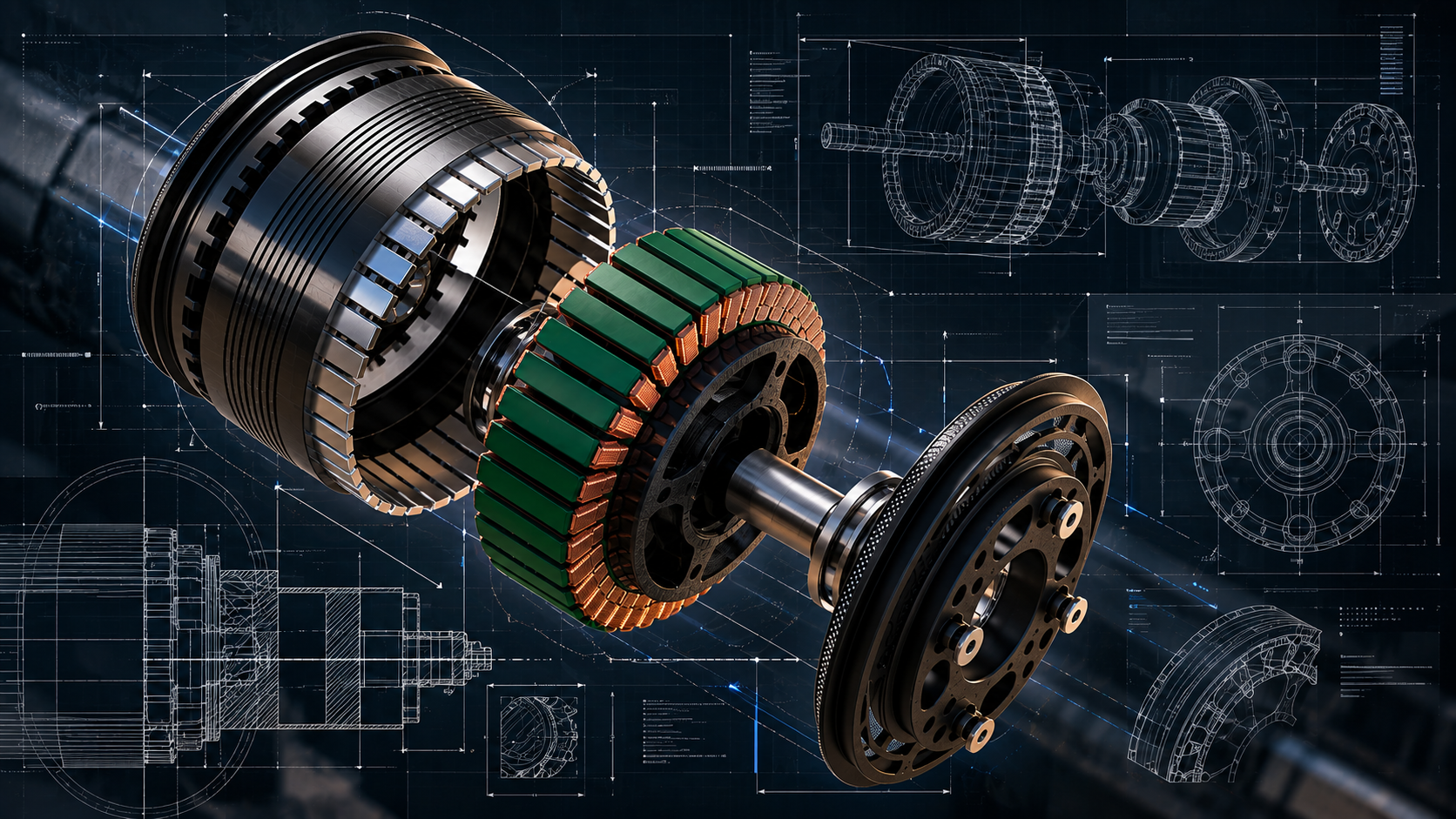
That's where CR Systems' approach to electric propulsion comes into play. CR Systems offers a broad portfolio of NDAA-compliant electric propulsion solutions, from off-the-shelf motors to custom propulsion systems engineered around specific aircraft and mission requirements.
That gives UAS manufacturers the ability to consider performance and compliance together rather than designing around a propulsion solution and addressing sourcing requirements later. And with more than 100 motor options spanning FPV and Group 1 platforms through larger heavy-lift applications, manufacturers can select propulsion based on the requirements of the aircraft without automatically sacrificing flexibility to meet sourcing objectives.
Of course, compliance alone does not make a successful aircraft. A motor can meet every sourcing requirement and still be the wrong motor for the mission.
UAS manufacturers still have to optimize for thrust, efficiency, weight, endurance, thermal performance, payload, reliability, and the realities of the operating environment. The difference is that performance and compliance can no longer be treated as entirely separate decisions. The strongest component strategy considers both.
For propulsion, that means finding solutions capable of delivering the performance required by the aircraft while also supporting the sourcing and compliance requirements of the program.
The UAS market is moving quickly, but one trend is increasingly clear: trusted supply chains matter.
Federal policy continues to emphasize reducing dependence on certain foreign technologies while strengthening domestic UAS and component manufacturing. At the same time, manufacturers are being asked to develop more capable aircraft, move from prototype to production faster, and prepare to manufacture at greater scale.
NDAA compliance sits at the intersection of many of those priorities. For UAS manufacturers, thinking about compliance earlier can help reduce sourcing risk, minimize the possibility of costly redesigns, and create platforms that are better positioned for the opportunities ahead.
Because choosing the right component is no longer only about asking: Will it perform?
It's also about knowing whether that component can support where the platform needs to go next.